
Shan Koe Mee is a traditional Myanmar card game in which players aim to achieve a total as close to nine as possible using two or three cards. Its appeal comes from deciding whether to keep the current hand or draw a third card, followed by comparing the final score against the Banker. At B8MY, players can learn how card values work, recognize AutoShan and understand the rules that determine winning outcomes before choosing a suitable table.
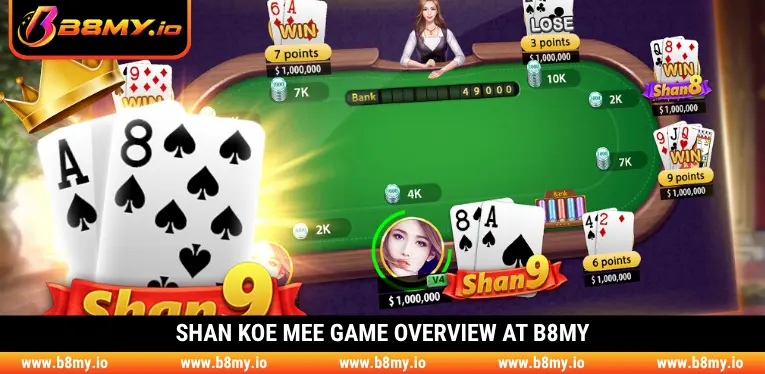
Shan Koe Mee Game Overview at B8MY
Shan Koe Mee originated as a traditional card game in Myanmar and is now available in various online versions developed by different providers. The exact developer and release date of the version offered at B8MY have not yet been verified. The game uses a standard deck for Banker-versus-player comparisons, with a distinctive last-digit scoring system and AutoShan rules when the first two cards total eight or nine.
| Information | Details |
| Game title | Shan Koe Mee |
| Myanmar name | ရှမ်းကိုးမီး |
| Category | Traditional Card Game |
| Origin | Myanmar |
| Theme | Card scoring and Banker-versus-player gameplay |
| Common deck | Standard 52-card deck |
| Cards used per hand | Two or three |
| Scoring range | 0–9 |
| Highest regular score | 9 |
| Key mechanics | AutoShan, Draw, Stand |
| Main objective | Achieve a stronger hand than the Banker |
| Platform | B8MY |
Shan Koe Mee Rules and the Objective of Each Hand
A typical Shan Koe Mee hand begins with the player and Banker receiving two cards each. The objective is to finish with a higher score than the opposing side under the applicable table rules. When a player does not have AutoShan, they may be allowed to keep their current score or draw a third card, depending on the version being played.
Unlike Texas Poker, this game does not require players to build a five-card Straight or Flush using standard poker hand rankings. Instead, scores are calculated from two or three cards and compared between the competing sides. Some variations introduce special combinations or different tie-breaking conditions, so B8MY members should review the Game Rules before joining a table.
How Card Values and Scoring Work in Shan Koe Mee
Understanding card values is essential in Shan Koe Mee. Under common scoring rules, an Ace counts as one point, numbered cards from two to nine retain their face values, and 10, J, Q and K count as zero. Whenever the total exceeds nine, only the final digit is used to determine the hand’s score.
| Card | Point value | Example |
| Ace | 1 | A + 8 = 9 points |
| 2–9 | Face value | 4 + 3 = 7 points |
| 10 | 0 | 10 + 7 = 7 points |
| Jack | 0 | J + 6 = 6 points |
| Queen | 0 | Q + 9 = 9 points |
| King | 0 | K + 5 = 5 points |
| Total of 10 or more | Use the final digit | 7 + 8 = 15, scored as 5 |
| Total of 20 | Scores zero | 8 + 7 + 5 = 20, scored as 0 |
AutoShan and the Decision to Draw a Third Card
One defining feature of Shan Koe Mee is that players cannot necessarily draw an additional card whenever they want. In many versions, an initial total of eight or nine triggers AutoShan, preventing further draws. With other totals, the decision to Draw or Stand may directly affect the outcome of the hand.

AutoShan – Starting with Eight or Nine Points
AutoShan occurs when the first two cards produce a score of eight or nine. This is considered a strong result under conventional scoring rules, and many tables require the holder to retain those two cards. For example, A and 8 create nine points, while 5 and 3 create eight. Any special priority given to AutoShan over other hand combinations depends on the specific table rules.
Draw – Taking a Third Card to Change the Score
Draw allows the player to receive one additional card to change the current total. For example, a starting hand of 2 and 3 scores five, but drawing a 4 increases the final score to nine. However, an extra card can also reduce the result. A player holding seven points who draws a 5 finishes with a total of 12, which counts as just two points.
Stand – Keeping the Current Hand
Stand means declining an additional card and keeping the current score for comparison against the Banker. This prevents a new card from lowering the existing total, but also removes the chance to improve it. At B8MY, the availability of Draw and Stand for particular scores must follow the rules of the table being played.
How Banker Comparisons Determine Wins and Losses
In Shan Koe Mee, once both sides have completed their drawing decisions, their final results are compared. Under basic scoring rules, the higher score wins: nine beats eight, eight beats seven, and so on down to zero. When several players participate, the Banker may compare hands separately against each player rather than declaring one winner for the entire table.
However, equal scores do not necessarily guarantee a tie or a refunded wager. Some versions favor the Banker, others return stakes, while certain tables apply additional conditions such as card suits or special hands. Players at B8MY should verify how Tie, AutoShan and special combinations are handled before committing their chips.
How to Play Shan Koe Mee at B8MY
To play Shan Koe Mee, locate the title in the card game collection at B8MY and check the available options. The interface may differ depending on the developer, particularly in table selection and drawing controls. The following five steps describe the usual flow of a Shan Koe Mee hand.
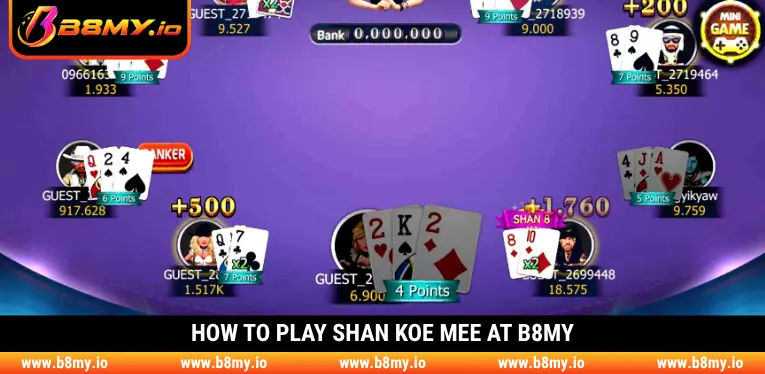
- Step 1 – Open the game: Visit the Poker or Card Game collection, find Shan Koe Mee and check the displayed developer information.
- Step 2 – Choose a table: Review chip limits, the number of participants and any Banker-specific rules before joining.
- Step 3 – Receive two cards: Identify the values of the initial cards, add their points and use the final digit to calculate the score.
- Step 4 – Choose Draw or Stand: If permitted, take a third card or keep the current hand. AutoShan usually prevents another draw.
- Step 5 – Check the outcome: Watch the hand comparison, confirm the winning side and review the chips paid according to the table rules.
Common Scoring Situations in Shan Koe Mee
Beginners learning Shan Koe Mee may confuse the numerical total of their cards with the final score used for comparison. For instance, a three-card total of 19 is not treated as nineteen points. Its last digit makes it a nine-point hand. Understanding this method helps players avoid evaluating their cards incorrectly.
Players should also avoid assuming that every Three of a Kind or sequence automatically pays more than a regular nine-point hand. Some variations include Special Hands, but their names, rankings and payouts are not standardized across providers. Members at B8MY need to distinguish ordinary point scoring from additional rewards for special combinations.
Key Situations That Affect Shan Koe Mee Results
Although the basic scoring system is straightforward, Shan Koe Mee can operate differently across game providers. Third-card permissions, ties and payout rules can all influence how a hand is settled. Before joining a table at B8MY, players should understand the following conditions.
- AutoShan Conditions: Check whether an initial eight or nine requires an automatic Stand and whether AutoShan receives special priority during comparison.
- Third-Card Rules: Verify when drawing is allowed, whether decisions have a time limit and when the system automatically keeps a hand.
- Tie Settlement: Determine whether equal scores favor the Banker, return the stake or require another tie-breaking condition.
- Special Hands: Review whether the table recognizes Pair, Three of a Kind or other combinations that outrank ordinary point totals.
- Betting and Payout Limits: Confirm minimum and maximum stakes, winning payouts and any applicable fees or commission.
Differences Between Shan Koe Mee Variations
Several games on the market use the name Shan Koe Mee, but they do not necessarily follow identical rules. Some versions focus on two- or three-card scoring, while others introduce special hands and different tie-breaking conditions. The comparison below describes common rule variations rather than versions independently confirmed to be available at B8MY.

| Feature | Common Point-Based Rules | Versions with Additional Rules |
| Initial cards | Usually two | May differ by version |
| Third card | Draw or Stand under table rules | May be automatic or restricted |
| Scoring | Final digit, from 0 to 9 | May include special-hand rankings |
| AutoShan | Initial score of eight or nine | May have different priority rules |
| Ties | Settled according to table rules | May involve suits or stake refunds |
| Special hands | Not always included | May recognize Pair, Three of a Kind and other combinations |
| Payouts | Based on Banker-versus-player results | May include special-hand multipliers |
| Availability at B8MY | Exact Game Rules require verification | Developer and availability require verification |
Conclusion
Shan Koe Mee combines traditional card gameplay with a 0–9 scoring system, AutoShan and decisions about whether to draw a third card. Understanding card values, comparing hands against the Banker and recognizing different tie rules helps players avoid confusion between game variations. Before betting, check the table conditions and select a suitable budget. Find the game at B8MY and review its available rules before playing.

Thinzar Wint Kyaw သည် B8my Myanmar ၏ တရားဝင် အမျိုးသမီး Brand Ambassador နှင့် အဓိက အကြောင်းအရာ သုံးသပ်သူ ဖြစ်ပါသည်။ မြန်မာနိုင်ငံ၏ ထင်ရှားသော သရုပ်ဆောင်နှင့် မော်ဒယ်တစ်ဦးအနေဖြင့် သူမသည် ကစားသမားများအတွက် ယုံကြည်စိတ်ချရသော ဘောလုံးပွဲစဉ် ခန့်မှန်းချက်များ၊ တိုက်ရိုက်ကာစီနိုနှင့် စလော့ဂိမ်းများ၏ အကောင်းဆုံးဗျူဟာများကို မျှဝေပေးပါသည်။ KPay နှင့် WavePay တို့မှတစ်ဆင့် လျင်မြန်စိတ်ချရသော ငွေသွင်းငွေထုတ် လမ်းညွှန်ချက်များနှင့်အတူ Thinzar Wint Kyaw သည် လုံခြုံပြီး တာဝန်သိသော ကစားနည်းပတ်ဝန်းကျင်ကို ထိန်းသိမ်းရန် ကတိပြုထားပါသည်။